Mobile rekeying for homes, rentals, and businesses
Make the old keys stop opening the locks
Moved in, lost a key, or unsure who still has a copy? KeyHive rekeys many home and business locks so the new keys work and the old keys stop working. In many cases, you can keep the locks already on the door.
Call KeyHive at (913) 944-8187 or request service.
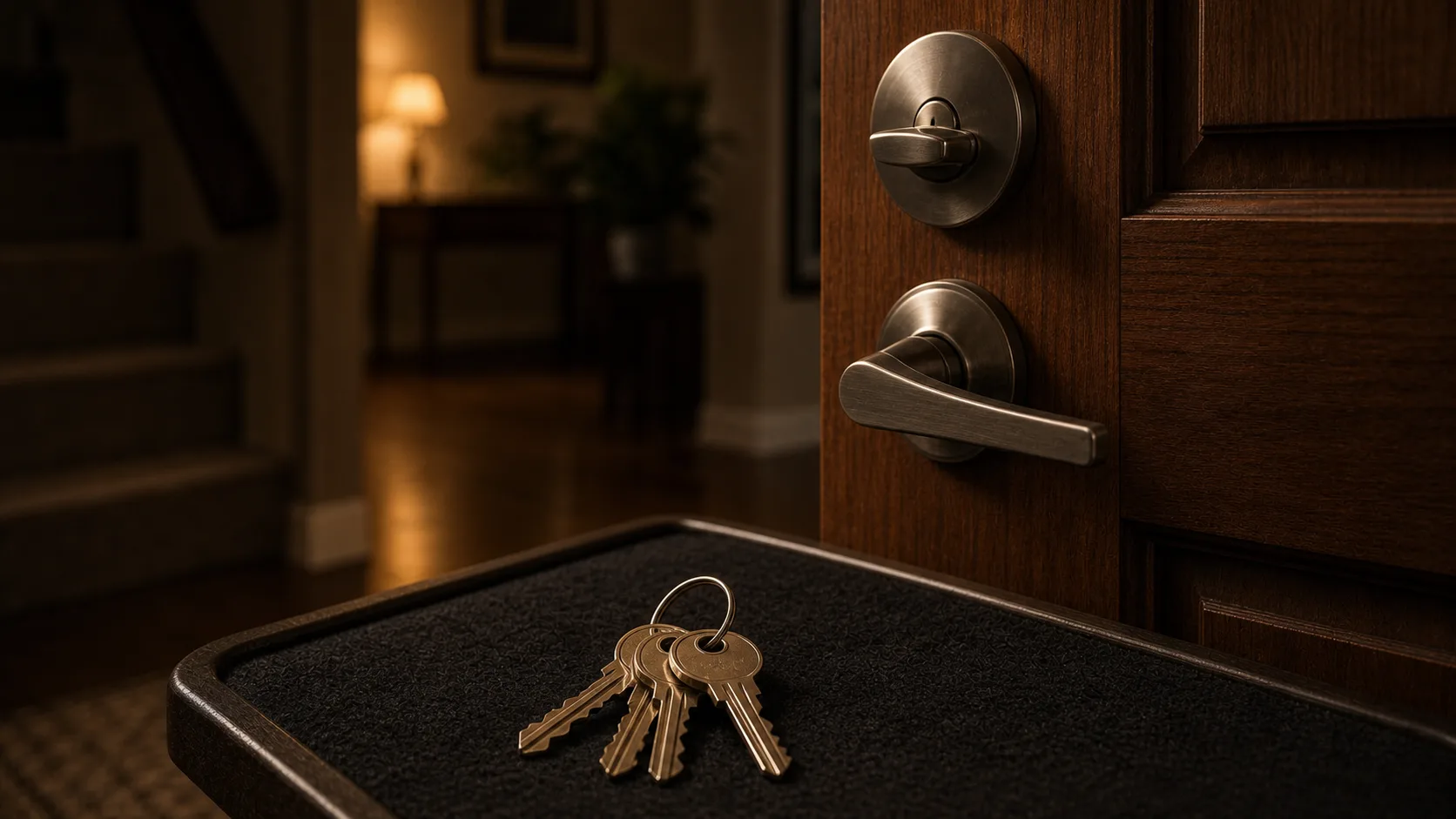 Rekeying keeps compatible locks on the door while changing which keys operate them.
 What does rekeying a lock change?
Rekeying changes the cylinder so a new key operates it and the prior key no longer does. It does not repair unrelated door damage or automatically replace the lock body.
- The cylinder is changed so the intended new key opens the lock and prior keys no longer do.
- The deadbolt, knob, lever, or mortise hardware stays when its cylinder can be rekeyed and the rest of the lock remains dependable.
- The new keys and each changed lock are tested before the service is complete.
- If you just moved in or lost a key, you may not know who still has a copy.
- For a landlord or property manager, a missing or unreturned tenant key may need to stop opening the lock before the next move-in.
- At a business, a key held by a former employee, contractor, vendor, or manager may need to stop opening the selected doors.
- After an eviction or foreclosure, KeyHive can provide locksmith service once possession has been lawfully returned to the owner or manager. KeyHive does not decide possession or remove occupants.
Need a key when no original is available?
- Copying a key requires an existing key. When the original is gone, the options depend on the lock, cylinder, keyway, condition, and who controls the property.
- For a home or apartment, the practical answer may be originating a key from a serviceable lock, rekeying the cylinder to a new key, or replacing hardware. These are not interchangeable services.
- A tenant should coordinate changes with the landlord or property manager when the lock or shared entry is not theirs to change.
Can several locks use one key?
- Often, when the cylinders and keyways are compatible. Every lock you want to use with one key still has to accept the same type of key.
- One door can have more than one keyed lock, such as a knob and a deadbolt, and each one may need to be rekeyed.
- Some locks can share one key while others remain separate when the cylinders and keyways allow it.
- Different brands, keyways, and cylinder formats may prevent every lock from using the same key.
Brand and cylinder details that affect rekeying
- Schlage, Kwikset, Defiant, Brinks, and commercial lock families can use different cylinders and keyways even when the exterior hardware looks similar.
- Kwikset SmartKey is identified and handled differently from a traditional pin-tumbler Kwikset cylinder.
- Commercial mortise cylinders, interchangeable cylinders, and residential deadbolt cylinders are not the same format.
- A readable key head, the face of the cylinder, and photos of both sides of the door can help identify the existing system before arrival.
Plan the new keys before several doors are changed
- List the doors affected by the missing, unreturned, or unwanted key.
- Decide which compatible doors should open with the same key and which must remain separate.
- For rentals, offices, HOAs, and managed properties, confirm which owner, manager, or responsible property contact receives each new key.
- Shared entrances should not be changed by assumption when other residents, tenants, or staff still rely on their current access.
Rekeying by location
Rekeying where old keys should no longer open locks
KeyHive rekeys compatible locks after a move, missing key, tenant change, or other access change at homes and businesses in these Kansas service locations.